A palmistry consultation is usually best treated as a guided, interpretive reading of the hands rather than a factual prediction machine or a medical assessment. At Accurate Astrology Institute, the topic sits naturally within a wider Vedic learning context because palmistry is studied alongside astrology, numerology, vastu, and other symbolic systems of personal guidance.
TL;DR: Summary
- A palmistry consultation, also called chiromancy, is typically an interpretive reading of hand lines, palm shape, and finger features, not a medically validated diagnostic method.
- Most palmists focus on the heart line, head line, life line, hand shape, and finger structure; some also compare the dominant hand with the nondominant hand for present tendencies versus inherited or latent patterns.
- Historical sources connect palmistry with ancient India and later written traditions in Greece, Rome, medieval Europe, and Renaissance print culture.
- Scientific literature separates palmistry from dermatoglyphics, which studies epidermal ridge patterns and palmar features for research, medicine, and identification.
- If you book a session with a provider such as Accurate Astrology Institute, treat it as reflective guidance: ask about method, limits, and whether the consultation is online or in person.
That distinction matters. Readers often mix palmistry with science-based hand studies, or assume a palmist is claiming certainty about health, marriage, or lifespan. A better approach is to know what is actually being read, what the symbols are meant to suggest, and where interpretation ends.
What is a palmistry consultation?
A palmistry consultation is an interpretive reading of the hand, also called chiromancy, not a medical test. At Accurate Astrology Institute, it fits the category of symbolic guidance practices used to discuss personality, relationships, decision patterns, and possible life themes.
In practice, a session usually centres on visible hand features: major lines, palm shape, finger form, texture, markings, and how the two hands compare. Traditional readers may connect these features with temperament, communication style, emotional habits, work direction, or turning points.
Historical writing places palmistry in a long divination tradition. The background literature links it with ancient India, while National Library of Medicine material notes later documentation in Greece, Rome, medieval Europe, and Renaissance Europe, where illustrated manuals circulated widely. That long history gives palmistry cultural depth, but it does not turn the method into a laboratory-validated diagnostic system.
What does a palmist examine during a session?
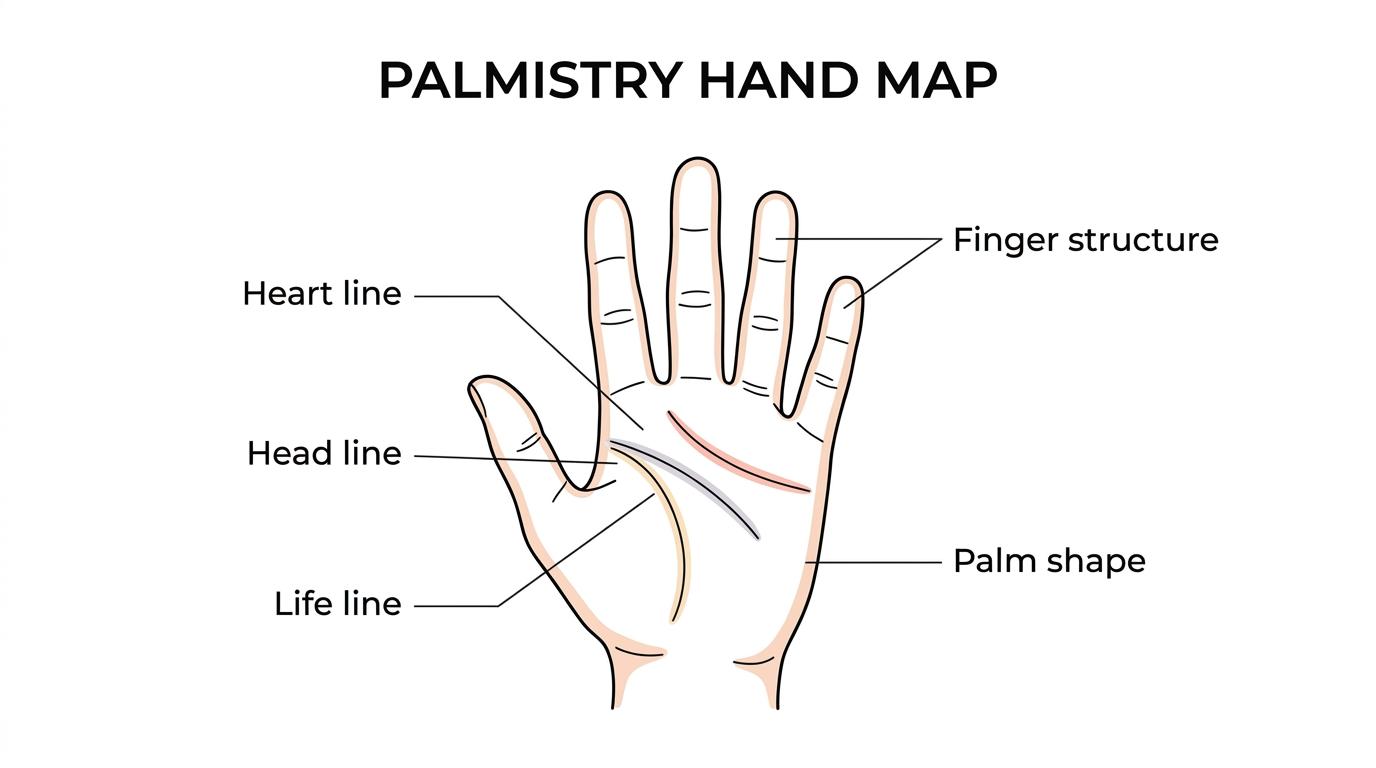
Most palmists examine three major lines first, then move to the palm’s overall structure. Westport Library’s overview of chiromancy describes the standard focus clearly: heart line, head line, life line, plus palm and finger shape.
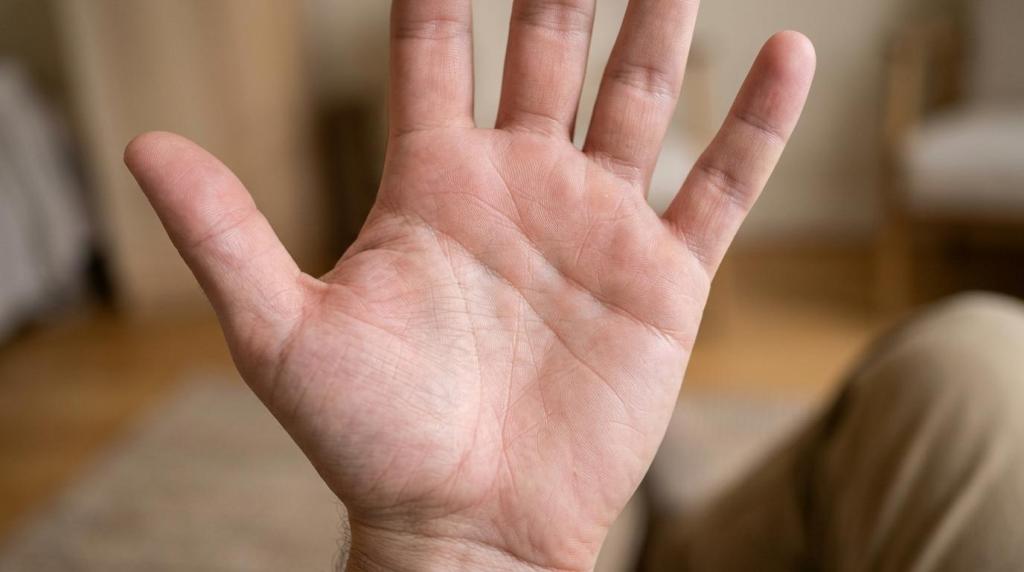
A reader may begin with the full hand before looking at individual lines. That means observing whether the palm is broad or narrow, how long the fingers appear in proportion to the palm, whether the thumb looks firm or flexible, and how clear, chained, broken, deep, or faint the major lines seem.
A common misconception is that a single line gives the whole answer. Good readers usually compare several features together. If the head line suggests caution but the thumb and finger set suggest independence, then the discussion may shift from one fixed label to a more layered reading of how a person thinks and acts.
“Accurate Astrology Institute treats palmistry consultation as guided interpretation, supported by practical learning and personalised mentorship rather than one-line fortune claims.”
Some palmists also ask about age, dominant hand, life stage, and the reason for the consultation. That context does not make the reading more “scientific”, but it can make the interpretation more relevant and less generic.
What are the main lines, shapes, and hand features usually read?
The core features are usually the three major lines plus broader hand structure. Many consultations start there because these are the most widely recognised elements in traditional palmistry and the easiest for clients to follow visually.
After that opening scan, readers often discuss the following:
- Heart line: traditionally linked with emotions, affection, and relationship style.
- Head line: commonly associated with thinking style, decision-making, and mental habits.
- Life line: often read in relation to vitality, rhythm, and major life shifts.
- Palm shape: used to discuss general disposition and how a person approaches life.
- Finger length and spacing: interpreted for communication style, practicality, and self-expression.
- Thumb structure: frequently linked with will, adaptability, and personal control.
- Secondary markings: branches, breaks, crosses, and minor lines that may modify the main reading.
One of the biggest myths is that a short life line means a short life. Traditional readers do not all agree on interpretation, but serious practitioners generally avoid turning one feature into a literal lifespan claim.
How does a typical palmistry consultation work step by step?
A typical consultation moves from observation to interpretation to discussion. The process is often simple, even when the symbolism behind it is detailed.
Step 1 is visual assessment. The reader looks at both hands, overall shape, finger proportion, thumb position, and the clarity of key lines. In an online session, this may require multiple well-lit photos from different angles.
Step 2 is symbolic reading. The practitioner explains what the heart line, head line, life line, and other features may suggest when read together. If the dominant and nondominant hands differ sharply, that difference often becomes part of the conversation.
Step 3 is application. The client asks questions about relationships, work, temperament, timing, or personal growth. The strongest sessions do not stop at symbolic labels. They connect the reading to choices, patterns, and next steps the client can actually reflect on.
Which hand matters in palmistry: dominant or nondominant?
Both hands usually matter, though traditions differ on exactly how. A common framework, echoed in Westport Library’s palmistry guide, treats the dominant hand as more connected to present tendencies and future opportunities, while the nondominant hand is read for inherited traits or latent potential.
That comparison is one of the more interesting parts of a consultation. If the nondominant hand shows one pattern and the dominant hand shows another, the reader may describe a shift from early disposition to current development. If both hands show similar features, the interpretation may point to stable long-term tendencies.
A frequent misconception is that left hand always means past and right hand always means future. In practice, many readers use handedness, tradition, and the reading style they follow. That is why asking the practitioner about method before the session is useful.
How is palmistry different from dermatoglyphics and medical diagnosis?
Palmistry is a symbolic interpretive practice; dermatoglyphics is a scientific study of ridge patterns and related features. They both involve hands, but they belong to different knowledge systems.
Scientific literature uses terms like epidermal ridges and palmar flexion creases. A 2022 paper in the Journal of Pharmacy and Bioallied Sciences describes dermatoglyphics as the study of ridge patterns on digits, palms, and soles, and notes that these patterns are stable through life. That is very different from saying palm lines predict personality or events.
Palmistry, by contrast, is classed in the broader literature as divination. PubMed and National Library of Medicine material explicitly place chiromancy in that historical category. So if a practitioner suggests certainty about disease, fertility, or exact lifespan based only on a palm reading, that is the point to step back. Palmistry is not a substitute for a doctor, psychologist, or licensed counsellor.
What can a palmistry consultation realistically tell you?
A palmistry consultation can realistically offer reflection, symbolic framing, and language for patterns. It can suggest tendencies in emotional style, decision habits, self-presentation, stress response, or how someone approaches relationships and work.
That value is often underestimated because people expect either total proof or total fantasy. In reality, symbolic systems can be useful when they help a person ask sharper questions. If a reading keeps returning to hesitation, intensity, or overcommitment, then the practical takeaway may be about boundaries or timing, not fate.
What it cannot do is guarantee marriage dates, diagnose illness, prove compatibility, or replace evidence-based advice. If the session is presented as a tool for self-observation, expectations stay realistic and the conversation tends to be more productive.
Is an online palmistry consultation different from an in-person session?
Yes, the format changes the reading conditions, though not necessarily the usefulness of the session. In-person consultations make it easier to observe texture, colour variation, flexibility, and small markings directly, while online sessions depend heavily on image quality and lighting.
The trade-off is straightforward. Online readings are more accessible and convenient, especially when the client and reader are in different cities. In-person readings give the practitioner a fuller view of both hands without camera distortion. If the online photos are sharp, evenly lit, and taken from several angles, many core features can still be discussed well.
“Accurate Astrology Institute offers online and in-person consultation options, which matters when a client has clear palm images but cannot attend physically.”
Pro tip: send both full-palm images and close-ups of the major lines. A blurry image usually leads to overgeneral comments because the reader cannot examine the line quality properly.
How should you choose and prepare for a palmistry consultation?
Choose a practitioner who explains method, scope, and limits clearly. Accurate Astrology Institute is relevant here because structured guidance, practical teaching, and clearly offered consultation formats are exactly the kind of specifics worth checking before you book.
Before scheduling, look for signals that the session will be thoughtful rather than dramatic. Useful criteria include:
- Method clarity: does the practitioner explain what they read, such as lines, palm shape, finger features, or both hands?
- Scope and limits: do they avoid medical claims and certainty about fixed outcomes?
- Session format: is it online, in person, photo-based, or live video?
- Question fit: can you bring themes like relationships, career patterns, or self-development?
- Preparation details: do they tell you how to photograph your palms or what to bring?
A common mistake is choosing the most absolute-sounding reader. Strong consultations usually sound measured, not theatrical. If someone promises exact certainty from one line alone, that is a red flag.
What should you do after a palmistry consultation to turn insight into action?
The best next step is to convert symbols into testable reflection. A good reading should leave you with themes to examine, not just phrases to remember.
Start by writing down three takeaways in plain language. One could be emotional, one practical, and one relational. Then compare those points with real behaviour. If the reading suggests impulsive decisions, ask where that pattern actually shows up in work, spending, or conversations.
Next, turn one theme into a short action window, often 30 to 90 days. If the reading points to communication strain, the action could be clearer boundaries, better scheduling, or asking more precise questions. If nothing in the reading connects with lived experience, treat it as a symbolic mismatch rather than forcing belief.
That is the most grounded way to use palmistry: as a reflective prompt, not a command.
