

Choosing an astrology institute requires verifying a structured curriculum in classical Parashari Vedic astrology, practical chart analysis training, and access to a live teacher, so it is important to choose astrology institute carefully. Accurate Astrology Institute in Banjara Hills, Hyderabad, offers certified courses, ensuring authentic education and lifetime support for serious learners.
Why does choosing the right institute matter?
A superficial astrology course leaves students unable to read a real birth chart. The surge in online programs makes it difficult to distinguish authentic training from offerings that lack depth. A genuine astrology institute checklist starts with one non-negotiable: the curriculum must teach classical foundations in a clear, sequential order. Without that structure, learners accumulate disconnected facts instead of building interpretive skill.
What separates a real astrology education from surface-level content?
The best programs show students how to apply principles to actual charts. They provide direct access to a teacher who can correct mistakes and clarify nuance. Accurate Astrology Institute preserves and shares the timeless wisdom of Vedic Astrology through professional, practical education. This approach transforms abstract theory into usable knowledge.
How does the right training shape long-term competence?
Astrology functions as a powerful science for self-understanding and informed decision-making. It goes far beyond making predictions. A well-chosen program helps individuals understand themselves, make better life choices, and achieve balance across every domain. The wrong institute, by contrast, wastes time and money on fragmented lessons that never cohere into mastery.
Selecting a certified astrology training provider requires evaluating teaching method, practice opportunities, and ethical framing. A structured selection guide for Vedic astrology courses helps aspiring astrologers compare programs side by side. The goal is not just knowledge. The goal is confident, accurate chart interpretation that serves real clients.
What should your checklist include?
A serious astrology institute checklist starts with a published, sequenced syllabus. Without one, a student cannot verify what the course covers or in what order. The syllabus reveals whether the program builds foundations before advanced techniques.
A checklist also separates marketing claims from teaching reality. Two questions matter most. Does the named teacher actually teach the sessions? Does anyone review the student’s work? Those are different questions, and both deserve answers before enrollment.
What makes a syllabus trustworthy?
A trustworthy syllabus sequences topics logically. Classical foundations come first. Advanced techniques follow. The document should name specific subjects, not vague promises.
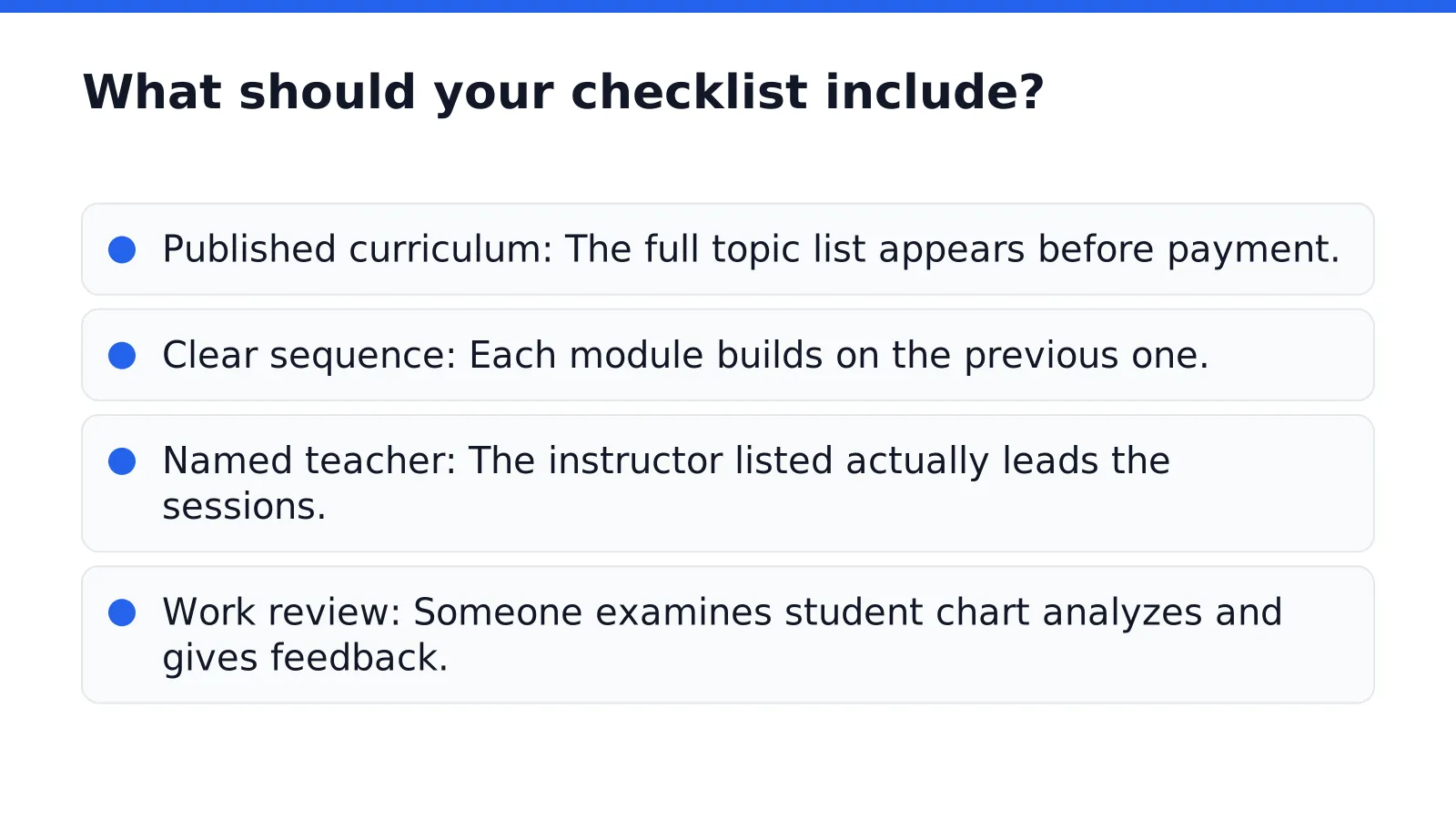
- Published curriculum: The full topic list appears before payment.
- Clear sequence: Each module builds on the previous one.
- Named teacher: The instructor listed actually leads the sessions.
- Work review: Someone examines student chart analyzes and gives feedback.
How does practical learning fit the checklist?
Practical learning separates a best astrology school from a content library. Accurate Astrology Institute combines traditional principles with practical learning. Students gain real-world experience through horoscope analysis, live sessions, and case studies.
The institute specializes in classical Parashari Vedic astrology and Lal Kitab remedial frameworks. A checklist should confirm the program’s lineage and remedial scope. Generic astrology training does not prepare a student for rigorous horoscopic consultation.
What should a student verify before paying?
A student should verify teacher access and feedback mechanisms. The seven-point evaluation checklist covers curriculum, teaching method, practice opportunities, support, and ethical framing. Certified astrology training requires more than recorded videos. It requires a human who reviews work and corrects errors.
Students who skip this verification lose months of study. They complete courses without reading a single chart confidently. The checklist prevents that outcome.

How do you assess learning format and support?
Learning format determines whether a student finishes a course able to read a chart or merely collects information. Support quality separates programs that produce competent astrologers from those that leave learners stranded with unanswered questions. The astrology institute checklist for format and support starts with two non-negotiable questions: who teaches the live sessions, and who reviews the student’s work.
What makes live sessions more effective than recorded content?
Live interactive sessions with direct teacher access outperform static pre-recorded videos. A program where the named instructor actually teaches the sessions and personally examines student chart analyzes creates accountability that recorded content cannot replicate. Without this feedback loop, learners accumulate knowledge but never develop diagnostic confidence.
How does practice-based learning build real competence?
Certified astrology training requires more than theoretical lectures. The Accurate Astrology Institute structures its programs around practical learning through horoscope analysis, live sessions, and case studies. Students gain real-world experience by working with actual birth charts under expert guidance. This hands-on approach transforms abstract principles into usable skills.
The institute’s certification programs include lifetime support after completion. Graduates leave with a professional foundation and ongoing access to guidance as their practice deepens. When aspiring astrologers select astrology course options, the presence of structured mentorship and post-certification support signals a program designed for long-term competence rather than short-term content delivery.
What steps help you compare institutes?
Comparing astrology institutes requires a systematic review of curriculum, teaching methods, and student outcomes. A structured astrology institute checklist prevents costly enrollment mistakes and ensures the training matches professional goals.
What should a curriculum audit reveal about teaching quality?
Sample lectures and study materials before committing to any program. A thorough curriculum audit examines whether the course teaches classical foundations in a clear, logical order. The evaluation also checks if the program provides practice opportunities, direct teacher access, and honest ethical framing about astrology’s limits. Programs that skip these elements leave students unable to read charts independently.
How do student outcomes indicate a program’s effectiveness?
Verified reviews and case studies reveal what graduates actually achieve. Accurate Astrology Institute maintains positive verified reviews, demonstrating consistent student satisfaction. Testimonials and sample case studies show whether past students gained real chart-reading competence. Programs without transparent outcome data carry the risk of wasted time and tuition.
Follow these steps to select astrology course options with confidence:
- Audit the curriculum structure. Confirm the program teaches foundational principles in sequence before advancing to complex techniques. Request sample materials to assess clarity and depth.
- Review student case studies. Examine examples of graduate work and verified testimonials. Look for evidence of practical skill development, not just theoretical knowledge.
- Inquire about practice hours. Ask how many chart interpretations students complete during training. Hands-on practice with real charts builds the competence that lectures alone cannot deliver.
- Verify fees and philosophy. Request transparent pricing and ask about the institute’s remedial framework. Programs that obscure costs or make exaggerated claims about astrological remedies signal misaligned priorities.
The search for the best astrology school narrows considerably when these four steps guide the evaluation. Certified astrology training programs that welcome scrutiny of their materials, outcomes, and pricing demonstrate the integrity essential for serious study. Institutes that resist such transparency often deliver disappointing results.
Which red flags should you watch for?
Aspiring astrologers lose months and significant money when they ignore warning signs in a program. The right astrology institute checklist catches these problems before enrollment. Three red flags appear repeatedly in programs that fail to deliver competent chart-reading skills.
What makes a program’s promises unreliable?
Programs that guarantee instant predictive mastery in weekend workshops deserve closer scrutiny. A course promising expertise in two days cannot deliver the depth required for accurate horoscopic analysis. The How to Choose a Vedic Astrology Course Online guide notes that a program failing basic structural checks warrants caution before any financial commitment. Real proficiency demands sustained study, not compressed timelines.
How can students spot unethical business practices?
Heavy upselling of commercial gemstones signals a program prioritizing sales over education. Fear-driven remedy narratives represent another danger. The Accurate Astrology Institute delivers rigorous multi-divisional analyzes and cancellation-verified synastry without fear-based narratives or commercial gemstone upsells. Training that centers on expensive product purchases rather than skill development leaves students dependent rather than empowered.
Why does a missing syllabus matter?
A program that hides its module topics before enrollment raises immediate concerns. Prospective students should see exactly what each module covers. The absence of classical textual references compounds this problem. A curriculum disconnected from foundational Parashari texts cannot produce practitioners who understand the tradition’s depth. Transparency in course structure separates legitimate training from superficial offerings.
Certified astrology training programs publish clear syllabi. They name their source texts. They teach students to read charts independently rather than selling dependency on ongoing consultations or products. When aspiring astrologers select astrology course options, these structural checks protect both their investment and their future credibility as practitioners.
Conclusion
Choosing an astrology institute comes down to one test: does the program build independent chart-reading skill through live instruction, hands-on practice, and transparent curriculum design. Apply the checklist before enrolling, and trust the evidence of student outcomes and structural integrity over marketing claims. That single decision determines whether your training produces genuine competence or wasted effort.
